
What Draws Laos to the Shanghai Cooperation Organization

Author: Ousavanh Thiengthepvongsa, Director General, Socio-Economic Policy Research Institute, Lao Academy of Social and Economic Sciences
From August 31 to September 1, 2026, leaders gathered in Bishkek, the capital of Kyrgyzstan, for the Shanghai Cooperation Organization (SCO) Summit.
Among the participants was Laos, making its first appearance at the summit in its capacity as an SCO Dialogue Partner. President Thongloun Sisoulith led the Lao delegation. What considerations lie behind Laos’ decision to engage with this multilateral platform?
From ASEAN to the SCO
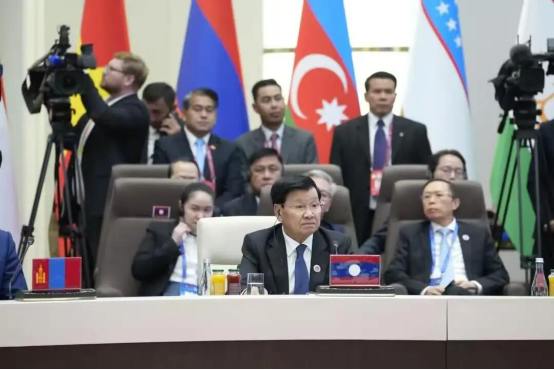
For much of the past several decades, Laos has pursued its regional engagement chiefly through ASEAN and the cooperation mechanisms in the Greater Mekong Subregion. Its new relationship with the SCO as a Dialogue Partner signals a substantial widening of the country’s strategic outreach. It also dovetails with the fifth priority of the 10th Five-Year National Socio-Economic Development Plan covering 2026–2030. The China-Laos Railway has been instrumental in advancing Laos’ transition from a landlocked state towards a land-linked economy, strengthening its role as a gateway between China and ASEAN. The SCO provides an avenue for carrying this connectivity into Central Asia and Europe. By extending its economic reach along the Belt and Road Economic Belt, Laos could enhance its economic resilience and reduce excessive reliance on individual markets.
Laos’ engagement with the SCO is consonant with the Shanghai Spirit, which champions mutual trust and benefit, equality, consultation, respect for cultural diversity, and pursuit of common development. In important respects, these principles echo the ASEAN Way, particularly its commitment to consensus building and non-interference in internal affairs. For Laos, ASEAN remains the principal anchor of its regional diplomacy, while the SCO adds another strategic avenue. By engaging with both, Laos is seeking greater room for maneuver in a multipolar international system.
Laos’ Four Strategic Priorities
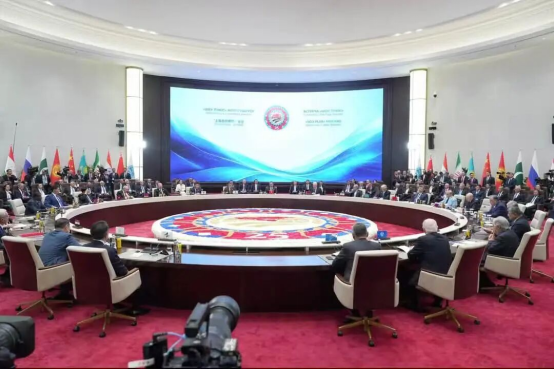
On July 10, 2026, Laos formally signed the Memorandum of Understanding conferring SCO Dialogue Partner status. Within less than two months, President Thongloun Sisoulith used the Bishkek meeting to identify four priority areas for future cooperation.
Agriculture and Food Security
Laos intends to secure wider access for agricultural products with strong export potential across SCO markets. In parallel, it is looking to Central Asian partners for strategic production inputs, including fertilizers, raw materials, and fertilizer-manufacturing technologies. Such cooperation could help ease production costs at home.
Digital Transformation
Digitalization corresponds with one of the four breakthrough priorities endorsed at the 12th National Congress of the Lao People’s Revolutionary Party, which calls for accelerated progress in science, technology, innovation, and digital development. The focus spans three interconnected spheres, namely the digital economy, digital society, and digital governance. Laos also sees technology transfer from SCO member states as a means of accelerating progress across these areas.
Connectivity
Connectivity is equally central to Laos’ development strategy and aligns with its program for linking domestic infrastructure more closely with regional and international networks. At the core of this effort is the China-Laos Railway. By upgrading its role and integrating it more deeply into the Eurasian transport network, Laos hopes to develop it into a major transit hub.
Banking and Financial Cooperation
In banking and finance, Laos is seeking more active participation in the SCO Interbank Consortium and greater use of local currencies in cross-border settlement. The broader objective is to reduce its dependence on major global currencies.
Why the Multilateral Platform Matters
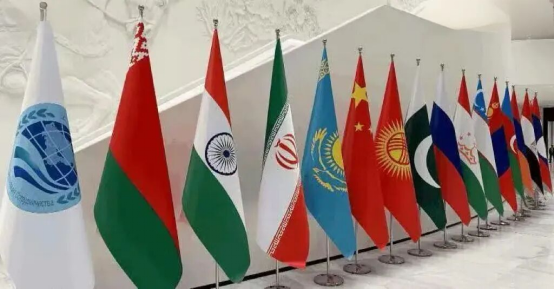
Laos’ engagement with the SCO broadens its links with the Global South. It can also complement deeper ties with China through the Laos-China community with a shared future, reinforce the Laos-Russia strategic partnership on security, and facilitate the country’s engagement with large markets such as India and Pakistan. At the same time, the organization provides a bridge to economies with substantial financial and energy resources, notably the United Arab Emirates, Saudi Arabia, and Qatar. Moreover, participation in SCO cooperation mechanisms gives Laos another avenue for responding to terrorism, separatism, and extremism, while intensifying joint efforts against transnational crime, telecommunications fraud, and illicit drug trafficking.
Against this backdrop, Laos’ accession to the SCO framework as a Dialogue Partner can be seen as a strategic adjustment to a changing international environment. It also serves the country’s two overarching tasks of safeguarding and developing the nation. In the longer term, this engagement may help strengthen the foundations for Laos to graduate from least-developed-country status and to advance towards the development vision set for 2055, when the Lao People’s Revolutionary Party will mark its centenary. That vision seeks to place the country on a firmer path towards long-term prosperity.

(If you have specific expertise, or would like to share your thoughts, please send us your writings at CAobservation@outlook.com)


Comments