
BRICS: A Course Correction to an Old International Order Dominated by a Few

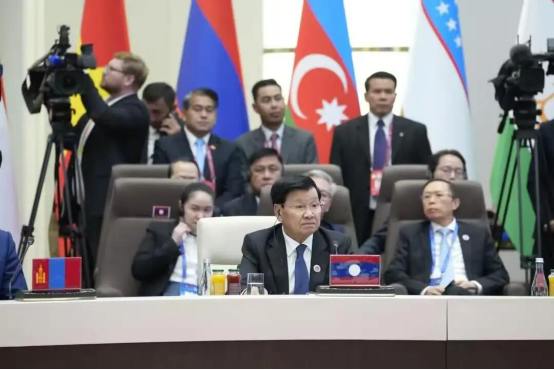
The 18th BRICS Summit took place in New Delhi, India, on September 12 and 13 under the theme “Building for Resilience, Innovation, Cooperation, and Sustainability”.
Now in its 20th year, the BRICS mechanism has expanded into a grouping of 11 full members and 10 partner countries. Its reach across Asia, Africa, Europe, and Latin America has given the Global South a broader and more prominent presence than ever before. Greater BRICS now represents more than half of the global population. In purchasing power parity terms, its members account for over 40% of the world economy and contribute more than half of global economic growth.
There is little question that BRICS commands considerably greater weight today than it did two decades ago. But its expansion has also sharpened a central challenge of how the mechanism’s growing scale can be translated into more effective cooperation and stronger collective capacity.
At the summit, Chinese President Xi Jinping delivered an important statement titled Jointly Shouldering the Responsibility of the Times and Striving to Be a Pioneering Force. Reflecting on the arduous journey of the past 20 years, he emphasized that solidarity and cooperation have always been the source of strength for the cause of BRICS. He called on BRICS countries to continue treating each other with candor and sincerity, and seeking common ground while shelving differences, to respect each other’s core concerns, and to commit themselves to communication and dialogue to increase mutual understanding and properly handle disagreements, so that BRICS cooperation will continue to advance steadily.
Why BRICS Appeals: Practical Cooperation over Bloc Confrontation
The expanding reach of BRICS owes much to the fact that it provides a platform for cooperation without replicating the logic of traditional military alliances or ideological blocs.
In an international environment marked by persistent geopolitical conflict, the widening fallout from unilateral sanctions, and the return of protectionism, most countries are seeking something fundamentally practical. They want a stable platform where they can talk about peace and pursue development. BRICS is one of the few multilateral mechanisms able to provide that degree of certainty. It imposes no ideological litmus test, attaches no political conditions to cooperation, and defines itself against no third party. Its focus is instead on connecting development strategies, advancing concrete projects, and pursuing practical cooperation for mutual benefit.
BRICS has continued to expand since 2024, while its partner-country framework has become increasingly developed. Inevitably, a broader membership also means a wider spectrum of national interests and expectations. Differences among BRICS countries on some international and regional issues are real. What is equally significant, however, is that those differences have not stopped cooperation from advancing.
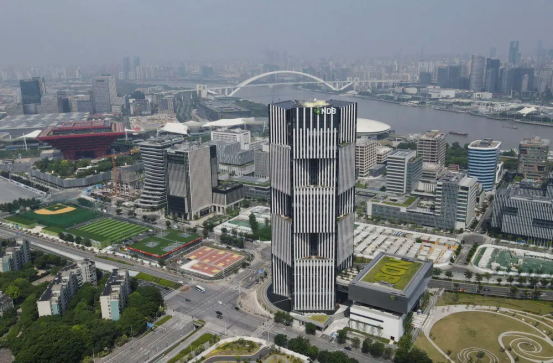
In trade and finance, the New Development Bank continues to provide financing, with more than US$42 billion in loans approved to date.
In industry and innovation, the BRICS Partnership on New Industrial Revolution has taken cooperation into fields ranging from industrialization and technological innovation to digital transformation and green development.
The institutional architecture of cooperation is also taking shape. The BRICS Customs Center of Excellence has been put into operation. The BRICS Digital Ecosystem Cooperation Network has widened its reach. The China Center for BRICS Industrial Competencies has been inaugurated. And the China-BRICS Artificial Intelligence Development and Cooperation Center is facilitating deeper collaboration.
Cultural and people-to-people exchanges, meanwhile, have continued to gather pace.
BRICS derives its real competitive strength not from requiring its members to act in perfect unison, but from providing a flexible and pragmatic framework for cooperation in which mutual trust can be built, project by project, through tangible results. Ultimately, the future substance of BRICS will be measured not by scale alone, but by whether it can turn that scale into a capacity for meaningful coordinated action.

(If you have specific expertise, or would like to share your thoughts, please send us your writings at CAobservation@outlook.com)

Comments