
China’s Marine Economy: A Vast Market Open to Cooperation

Author: CHI Fulin, President of the Hainan Institute for Free Trade Port Studies.
China has formed a vast ocean economy market exceeding RMB 11 trillion. In 2024, its ocean economy accounted for 40% of the global total — significantly higher than the United States' 32% and the European Union's 8%. Looking ahead, as this market continues to expand and open up, it will help shape new patterns of regional economic growth and regional cooperation.
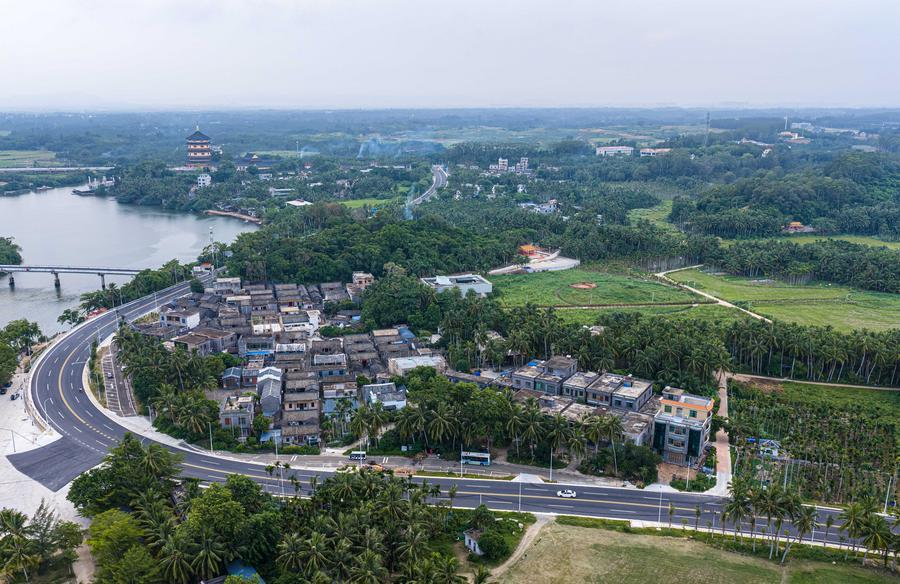
China's Ocean Economy: A Vast Market Bringing Major Opportunities for the Global Ocean Economy
China’s ocean economy is a vast global market. In 2025, China's gross ocean product accounted for 7.9% of GDP, well above the global figure of 3.5% in 2024. In 2024, China accounted for approximately 10% of global aquatic-product imports by value, ranking second in the world. By 2030, China's demand for aquatic products is expected to rise from approximately 70 million metric tons at present to 84 million metric tons, while import demand is projected to increase from about 7 million metric tons to more than 13 million metric tons.
It is also a vast market that supports the development of global ocean industries. Ocean industries worldwide are shifting away from resource extraction and trade in primary products toward greener, higher-end and more sustainable development, and China has become an important leader in this global transformation. From 2015 to 2025, the global offshore wind market grew at an average annual rate of 10%, while China came to account for more than 50% of cumulative global offshore wind capacity. In 2025, the global marine biopharmaceutical market reached USD 38.76 billion, an increase of nearly 170% from 2020. Over the same period, the added value of China's marine pharmaceuticals and biological-products industry grew by an annual average of 17.2%, doubling in size.
And it is a vast market for the application of marine science and technology innovations from around the world. On the one hand, China’s enormous ocean economy market offers a rich variety of application scenarios for marine science and technology innovation worldwide. On the other hand, China has a complete system covering all 15 major ocean industries, creating key conditions for translating marine scientific and technological advances into practical applications. In 2024, China held more than 50% of the global market for offshore engineering equipment and accounted for 55% of the world’s patents in this field. It had also built 60 automated and smart port terminals, more than 27% of the global total. In the future, the growth of China’s ocean economy will open up new application scenarios, forms of business and markets for marine science and technology innovation.
Accelerating the Development of a Large Common Market for the China-ASEAN Blue Economy
China and ASEAN should adapt to changes in the global ocean economy and the trend toward regional economic integration. East Asia and Southeast Asia now account for more than 60% of global ocean-economy value added and have become the center of global ocean-economy development. Approximately 30% of ASEAN countries' GDP comes from ocean-related activities. Maritime transport carries 94% of China's foreign trade, more than 60% of ASEAN's foreign trade, and 65% of trade between China and ASEAN. Every one-percentage-point increase in the share of seafood trade in total China-ASEAN bilateral trade would generate approximately USD 10 billion in additional trade.
The integration of China-ASEAN ocean industries should advance with a focus on industrial and supply chains:
In marine fisheries, for example, primary products accounted for 85% of ASEAN's seafood exports to China in 2025, while processed products accounted for only 15%. As a next step, trade in marine products should expand from primary products to deeply processed products, and from trade alone to cooperation across industrial and supply chains.
In renewable energy, cumulative investment in China-ASEAN cooperative hydropower, wind-power and photovoltaic projects had grown by more than five times compared with 2014 by the end of 2024, while installed capacity had risen more than fifteen times. Going forward, China and ASEAN should work together to shorten the transition period for achieving “zero tariffs” on the raw materials, technological equipment and key components used in offshore wind power, and ASEAN should further expand market opening in its renewable energy sector.
In marine high-tech industries, marine biomedicine should be made a priority. The two sides could jointly establish marine innovation laboratories to promote cooperation in deep-sea science and technology innovation and the sharing of its results; jointly set up enclaves for translating marine biomedicine research results into practical applications, building an industrial chain combining “Chinese research and development” with “ASEAN manufacturing”; and jointly develop intermediary organizations for the application of research results, technology transfer and technology transactions between China and ASEAN.
An efficient and secure China-ASEAN maritime transport network centered on ports should also be developed. To meet the practical needs of China-ASEAN ocean-industry integration, the two sides should cooperate, with enterprises as the principal actors, in the construction, renovation and upgrading of port infrastructure. They should jointly develop a "cross-border customs cooperation platform" to enable mutual recognition of information concerning inspection and quarantine, certification and accreditation, and standards and metrology, and jointly build demonstration smart ports.
Using Economic and Trade Cooperation to Lead Governance Rules and the Alignment of Standards
The alignment of market rules should be advanced, with a focus on ocean-related consumption. By 2030, for example, the number of cruise tourists in China is expected to rise from the current 1.3 million to 4.5 million. The sector's direct economic contribution is projected to exceed RMB 75 billion, while the economic scale of the entire industrial chain is expected to reach RMB 120 billion. It is recommended that, on the basis of jointly developed specific standards, China, ASEAN and other relevant countries fully align their regulation of cruise tourism markets; explore the launch of a regional tourism-card development plan and promote tourism connectivity and mutual visa-free travel among countries and regions in the area; support enterprises in countries along the relevant routes in jointly developing cruise tourism and other marine service products for Chinese consumers; expand the scope of visa-free entry for cruise passengers; and introduce regional travel-facilitation arrangements covering one journey with multiple stops.
The development of ecological and environmental governance rules should aim at sustainable development. Globally, 3 billion people depend on the ocean for survival, while approximately 625 million people in ASEAN depend on it for their livelihoods. Compared with the 1950s, total fish stocks in the South China Sea have declined by 70%–95%. Against this backdrop, and in response to the shared needs of regional cooperation and development, accelerating the establishment of ecological and environmental governance mechanisms has become an urgent task. The region could jointly formulate energy-consumption standards for ocean industries while granting special treatment to less developed countries; formulate a joint initiative to develop low-energy, low-emission ocean industries; explore the establishment of a China-ASEAN Committee for Marine Sustainable Development and the designation of special marine protected areas spanning multiple sea areas and nature reserves; jointly study systems of technical standards; and explore the creation of a China-ASEAN Blue Carbon Trading Market.
Practical steps should be taken to build regional cooperation mechanisms, including joint marine spatial planning. Maritime interests across the wider South China Sea region are now deeply interconnected, and no single party can resolve shared cross-regional and cross-sectoral challenges on its own. Among the many governance tools available, marine spatial planning is both foundational and a guiding first step. It is not only an important instrument for resource allocation and ecological protection, but can also serve as an important public good that promotes regional cooperation. It is recommended that this forum serve as an opportunity to encourage Maritime Silk Road countries, particularly China and ASEAN members, to strengthen exchanges and cooperation in marine spatial planning, integrated coastal-zone management, ecological protection, and the development layout of ocean industries, gradually producing more outcomes based on joint research, joint planning and joint governance.
Hainan at the Forefront of China-ASEAN Cooperation
Hainan stands at the forefront of China-ASEAN cooperation and is authorized to administer two-thirds of China's total maritime area. Hainan Province’s 15th Five-Year Plan sets the strategic goal of fully “growing stronger through the sea and creating a new ‘Maritime Hainan’” by 2035. Creating a new “Maritime Hainan” would have implications beyond doubling the scale of the province's ocean economy; more importantly, it would enhance Hainan's strategic role in China's opening-up and cooperation. In the coming years, by drawing on its marine-resource advantages and the opening-up policies of the Hainan Free Trade Port, Hainan is well positioned to become a strategic platform for the large common market for the China-ASEAN blue economy in such fields as deep processing of marine products, cruise tourism, deep-sea science and technology, and offshore energy, while playing a larger role in advancing regional cooperation in ocean governance.

(If you have specific expertise, or would like to share your thoughts, please send us your writings at CAobservation@outlook.com)


Comments