
Why Deepening ASEAN-China Ties Remains Critical for Industrial Resilience


Author: Veronika Saraswati, Global Development Research Center, Director
As manufacturing integration between ASEAN and China deepens, the relationship is generating both significant opportunities and new strategic dilemmas. Expanding industrial cooperation has accelerated ASEAN’s participation in emerging sectors such as electric vehicles, renewable energy, and digital commerce. At the same time, the region finds itself navigating increasing geopolitical pressures.
Against this backdrop, ASEAN’s challenge is not simply how to attract investment, but how to leverage this growing interdependence to upgrade its industrial capacity while managing the external risks. The opportunities are substantial, but so too are the structural constraints facing the region.
Opportunities for ASEAN and China: leveraging interdependence for industrial leap
a. Green industrial revolution collaboration
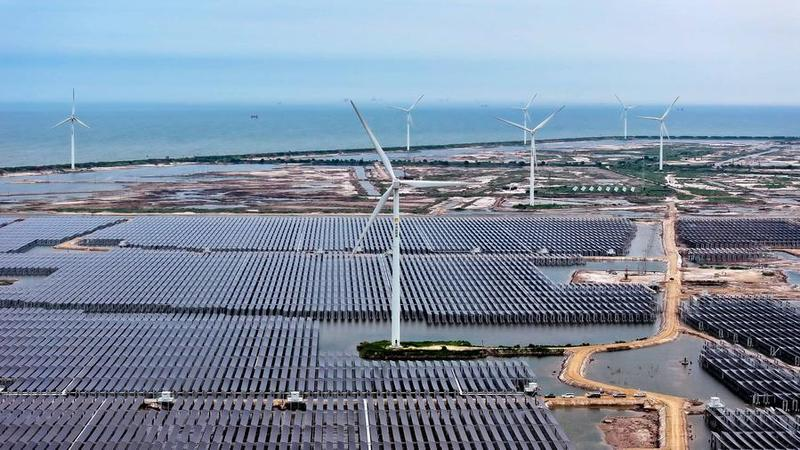
One of the most tangible opportunities from this collaboration is the acceleration of ASEAN's energy transition. In this context, China's renewable energy-based technology offers a cheaper and faster solution compared to Western partners. China's strength in green industry innovation greatly benefits ASEAN's economic growth while prioritizing environmental friendliness, as ASEAN is experiencing severe environmental degradation marked by a significant rise in air temperatures.
Thailand has leveraged Chinese EV factory investments (BYD, Great Wall Motors) not only for the local market but also as an export base. Chinese companies as major foreign investors have brought higher-value, more complex and newer technologies to Thailand. This marks a significant strategic shift from traditional manufacturing towards modern. This process establishes a technology spillover effect, giving grassroots communities access to economic growth.
Indonesia is now China's main destination for green investment in the world, both in terms of project volume and investment value, with the project value being very significant. This investment is primarily focused on utilizing Indonesia's nickel resources to support the global electric vehicle (EV) ecosystem, and is beginning to expand into the solar energy sector.
b. Digital transformation and SME inclusivity
In addition to hardware, digital collaboration has created new pathways for ASEAN MSMEs. The integration of Chinese e-commerce platforms with local logistics systems has enabled the phenomenon of 'export through live streaming'. Durian farmers in Malaysia or wood craftsmen in Vietnam can now sell directly to Chinese consumers.
This phenomenon reflects the 'many channels' characteristic in complex interdependence. The relationship between ASEAN and China no longer occurs solely at the inter-governmental level, but also takes place through digital platforms connecting millions of individuals across borders.
c. Semiconductors as a center of new innovation
Under US sanctions that tighten China's access to advanced chip technology, the collaboration between China and ASEAN has actually become closer, positioning ASEAN as an alternative innovation hub for China. In January 2026, a major Chinese semiconductor company (Xynenet/Silicon Integrated) will soon sign a major investment agreement to establish a factory in the Johor-Singapore Special Economic Zone (JS-SEZ).
This investment is not only for the established packaging and testing operations, but also to build an advanced manufacturing/wafer fabrication line, which represents a significant step forward for Malaysia's semiconductor ecosystem. Malaysia, which has long been a centre for semiconductor packaging and testing, is now attracting Chinese investment to build wafer fabrication plants. The presence of these Chinese companies is creating an urgent need for skilled labour, driving knowledge transfer.
Challenge: ASEAN as a geopolitical hostage of the US’ political economy interests
ASEAN+3's dependence on trade integration with the US has become a source of vulnerability because US trade policy is increasingly unpredictable. While the trade risk cluster shows that not all ASEAN+3 countries are highly vulnerable to US trade policy actions as is the case in the European Union, Canada and Mexico, some ASEAN+3 economies face higher risks than others due to their greater dependence on the US market, their exports' higher elasticity to the US, and/or higher domestic value added from their exports to the US.ASEAN+3’s reliance on trade integration with the US is becoming a source of vulnerability as US trade policy becomes increasingly unpredictable.
Singapore is the ASEAN member most vulnerable to the impact of the US-China trade war, mainly due to its heavy economic and trade dependence on the US. Although subject to the lowest US tariff in ASEAN (only around 10%), its export dependence on the US is extremely high. According to data from the Institute of Chartered Accountants in England and Wales in June 2025, the value of Singapore's goods and services exports reached 124% of its total GDP. This means that Singapore's economy is heavily dependent on foreign demand (especially the US), not on domestic demand; and more than 6% of Singapore's GDP relies on direct and indirect exports to the US.
ASEAN+3’s reliance on trade integration with the US is becoming a source of vulnerability as US trade policy becomes increasingly unpredictable. While other ASEAN countries like Indonesia and Vietnam experience different impacts compared to Singapore, Vietnam, which is highly dependent on exports of finished goods to the US, also faces major issues, but benefits from the relocation of factories from China. However, Vietnam still has the potential to become the next target of US retaliatory tariffs. Indonesia experiences a muted rather than sudden impact due to lower export dependence on the US.
The Philippines considers the reduction of the rate from 20% to 19% as a 'major achievement'. However, analysis shows that the previous basic rate in the Philippines was only 17%, so effectively there has been a net increase of 2%. In return, the Philippines must open its agricultural market to US products (soybeans, wheat, meat) without barriers, while Philippine exports are still subject to a 19% tariff. US tariff sanctions are devastating the Philippine agricultural sector, which employs 25% of the workforce.
Indonesian President Prabowo imposed a fatal decision by signing an agreement with the US, namely the ART (Agreement on Reciprocal Tariff) on February 2026. In the content of the ART agreement, a glaring imbalance is clearly visible, where Indonesia is required to fulfill 217 specific obligations, while the US is only committed to 6 obligations. Indonesia seems to be asked to sign a blank agreement, while the US is free to determine its content. Indonesian products entering the US are still subjected to an average tariff of 19%, even though there are 1,819 products that receive a 0% tariff. Conversely, Indonesia has to remove almost all tariff barriers on US products. Similar to the case of the Philippines, this agreement destroys Indonesia's agricultural sector, which was already essentially weak. The global crisis since 2025 has worsened the chronic deindustrialization condition in Indonesia, while also accelerating the manifestation of longstanding structural problems.
The worst perfect storm occurred in Cambodia, Laos, and Myanmar. These three countries are in the most critical situation due to a combination of the highest tariffs and internal structural weaknesses. Cambodia and Laos face the deadliest tariffs of up to 49%, while Myanmar is subjected to 40%. For countries with small economies that rely on exporting labor-intensive products (such as garments), this figure is a death sentence. In Myanmar, the 40% tariff imposed by the US came at a time when the country was already in crisis following the 2021 coup. Myanmar's situation is the worst in ASEAN.
ASEAN is caught between two world economic powers. While investment and trade are heading towards China, ASEAN remains a traditional ally of the US; this means that the defense sector of ASEAN countries is still directed and controlled by the US. The US continues to threaten to impose tariffs on ASEAN products considered merely 'proxies' for China. The underdevelopment of ASEAN countries' production aggravates this dilemma as ASEAN has no domestic alternatives.
Therefore, ASEAN should further deepen its interdependence with China, as in the past few decades China has been ASEAN's largest trade and economic partner. China's strong economy, combined with high technological advancements, has proven to greatly benefit ASEAN's economic resilience and growth. History also notes that even amid significant shocks during global crises, the resilience of the relationship between the two parties has remained intact.
During the COVID-19 pandemic, which caused global logistic disruptions, China responded by relocating part of its production to ASEAN, resulting in an increase in Chinese investment in ASEAN during the pandemic. When energy and food prices surged due to the Russia-Ukraine war, ASEAN became China's main target for diversification as part of its efforts to find alternative supply chains; and when the US increased tariffs and pursued decoupling, China relocated factories primarily to ASEAN.
This is objective evidence that China is not only positioned as a good ASEAN neighbor but also a reliable trading partner as China is responsible for supporting ASEAN's economic growth. The interdependence between the two sides is effectively mutually beneficial. Complex interdependence occurs when relations between countries are no longer dominated by military issues, but rather by economic, institutional, and social interconnections that create mutual dependence. In the context of ASEAN–China, regional manufacturing integration through RCEP and Asia's supply chains shows that economic interests can drive cooperation despite differing strategic perceptions of China.

(If you have specific expertise, or would like to share your thoughts, please send us your writings at CAobservation@outlook.com)


Comments